Moving to Texas from Out of State: A Practical Guide for 2026
Moving to Texas from another state comes with plenty of changes, from figuring out property taxes to getting your car registered and finding the right school district. If you’re headed to North Texas, there are a few things that are helpful to know before you arrive.
The good news is that most of the process is pretty straightforward once you know what needs to happen and when. This guide covers the most important deadlines, costs, and practical details to keep in mind as you make the move.
What actually changes financially
One of the biggest reasons people move to Texas is the lack of a state income tax. That’s a major advantage for many households, but it doesn’t mean Texas has low taxes across the board.
Property taxes tend to be higher than in many other states. Instead of relying on a state property tax, Texas funds local services through taxes set by school districts, counties, cities, and special districts. Because those rates vary by location, two homes just a few miles apart can have noticeably different property tax bills.
Whether you’ll actually save money by moving to Texas depends largely on where you’re coming from. Someone moving from California, New York, or Illinois may see significant savings because they are no longer paying state income tax. If you’re coming from a state like Florida or Tennessee that also doesn’t have a state income tax, the difference may be much smaller.
Sales tax is another expense to keep in mind. Across most of the Dallas area, the combined sales tax rate is 8.25 percent.
Your first 90 days, in the right order
One thing that can be confusing for new residents is that Texas handles driver’s licenses and vehicle registration through different agencies.
The Texas Department of Public Safety handles driver’s licenses, while the Texas Department of Motor Vehicles handles vehicle registration through your county tax assessor-collector’s office.
The order is important. You’ll need proof that your vehicle is registered in Texas before you can get your Texas driver’s license, so you’ll want to take care of the car first.
Within 30 days: your vehicle
Texas gives new residents 30 days to register and title a vehicle. Here’s what you’ll need to do:
- Get Texas auto insurance that meets the state’s minimum requirements.
- Get an emissions inspection if you live in one of the 17 Texas counties that require emissions testing. Collin County is one of them.
- Register and title the vehicle through your county tax assessor-collector’s office.
You’ll typically need your out-of-state title, proof of insurance, current driver’s license, and inspection paperwork.
You should also plan for a new resident vehicle fee of $90, or the applicable difference in sales tax depending on your circumstances.
Within 90 days: your license
Texas allows new residents to use a valid, unexpired driver’s license from their previous state for up to 90 days after establishing residency.
After that, you’ll need a Texas license. The application must be completed in person at a DPS office.
Bring your current out-of-state license, which you’ll surrender, along with proof of identity and Social Security number, two documents showing your Texas address, and proof of Texas vehicle registration for each vehicle you own.
If your current license is valid and unexpired, you generally won’t need to take a road test.
It’s also worth making an appointment before you go. DPS offices around Plano, McKinney, and Garland can be convenient options for people living in the northern suburbs, and appointments are available through the state’s scheduling system.
Where people land in North Texas
DFW covers a huge area, so choosing where to live can feel overwhelming at first. For many people, the commute is the first thing to consider, followed by schools, home prices, and the type of neighborhood you want.
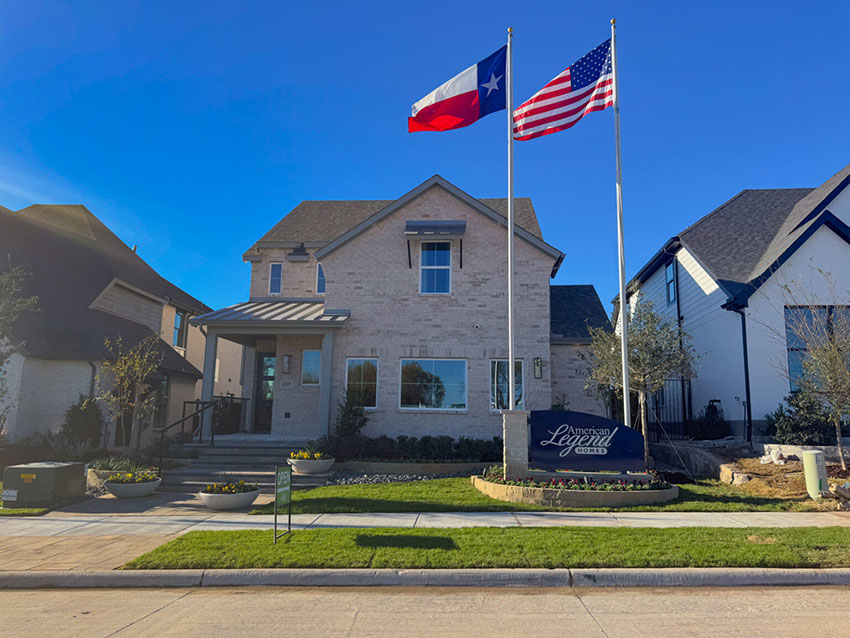
The northeast side of the metroplex, including areas around Rockwall, Lavon, and Wylie, has become a popular option for buyers looking for newer homes, more space, and a quieter setting while still having access to the Dallas area.
If you’re still trying to figure out which community or suburb is the right fit, take a look at our guide to moving to Dallas and nearby towns like Lavon.
Buying a home before you get here
Buying a home before arriving in Texas isn’t unusual, especially if you’re relocating for work. New construction can make the process a little easier because you’re able to compare floor plans, finishes, and available homes without having to tour dozens of older properties.
Generally, your two options are buying a home that’s already completed or under construction, or choosing a home that will be built after you purchase.
A move-in ready home can make sense if you’re working with a tight timeline, such as an expiring lease or a new job that requires you to be in Texas by a certain date. Building from the ground up takes longer, but it gives you more time to choose the home and finishes that work best for your family.
At Hillstead, five builders offer homes throughout the community, with prices ranging from the high $300s to the $800s. That gives buyers the opportunity to compare different floor plans and price points without having to travel all over the Dallas area.
File your homestead exemption the year you close
If you’re buying a primary residence in Texas, don’t overlook the homestead exemption. It can make a meaningful difference in your property tax bill.
Texas requires school districts to exempt $140,000 of a primary residence’s value from taxation. The amount increased from $100,000 in November 2025.
Another change that is particularly important for new construction buyers is the ability to claim a prorated exemption during the year you purchase the home, as long as the previous owner did not already have a homestead exemption for that year.
For a new construction home, the builder generally won’t have a homestead exemption on the property. That means buyers who close later in the year may be able to file for the exemption right away rather than waiting until the following year.
It’s a good idea to take care of this soon after closing.
Schools and enrollment
School district boundaries don’t always match city boundaries in Texas, which can be confusing when you’re moving from another state. A Lavon address, for example, doesn’t automatically tell you which school district a home belongs to. Communities just a few minutes apart can have completely different school assignments.
Hillstead is located within the highly rated Wylie ISD, with elementary, intermediate, junior high, and high school campuses serving the community. Schools within the district regularly rank high with the Texas Education Agency as well as Niche. We cover the district in more detail in our guide to buying a home near Wylie ISD.
If you’re moving with children, it’s a good idea to gather school records before you leave your current state. Most districts will ask for proof of residence, immunization records, a birth certificate, and transcripts from the child’s previous school.

What surprises people six months in
Some parts of moving to Texas are easy to research before you arrive. Other things don’t really make sense until you’ve lived here for a while.
The Summer Heat
The summer heat is probably one of the biggest adjustments for people moving from outside the South.
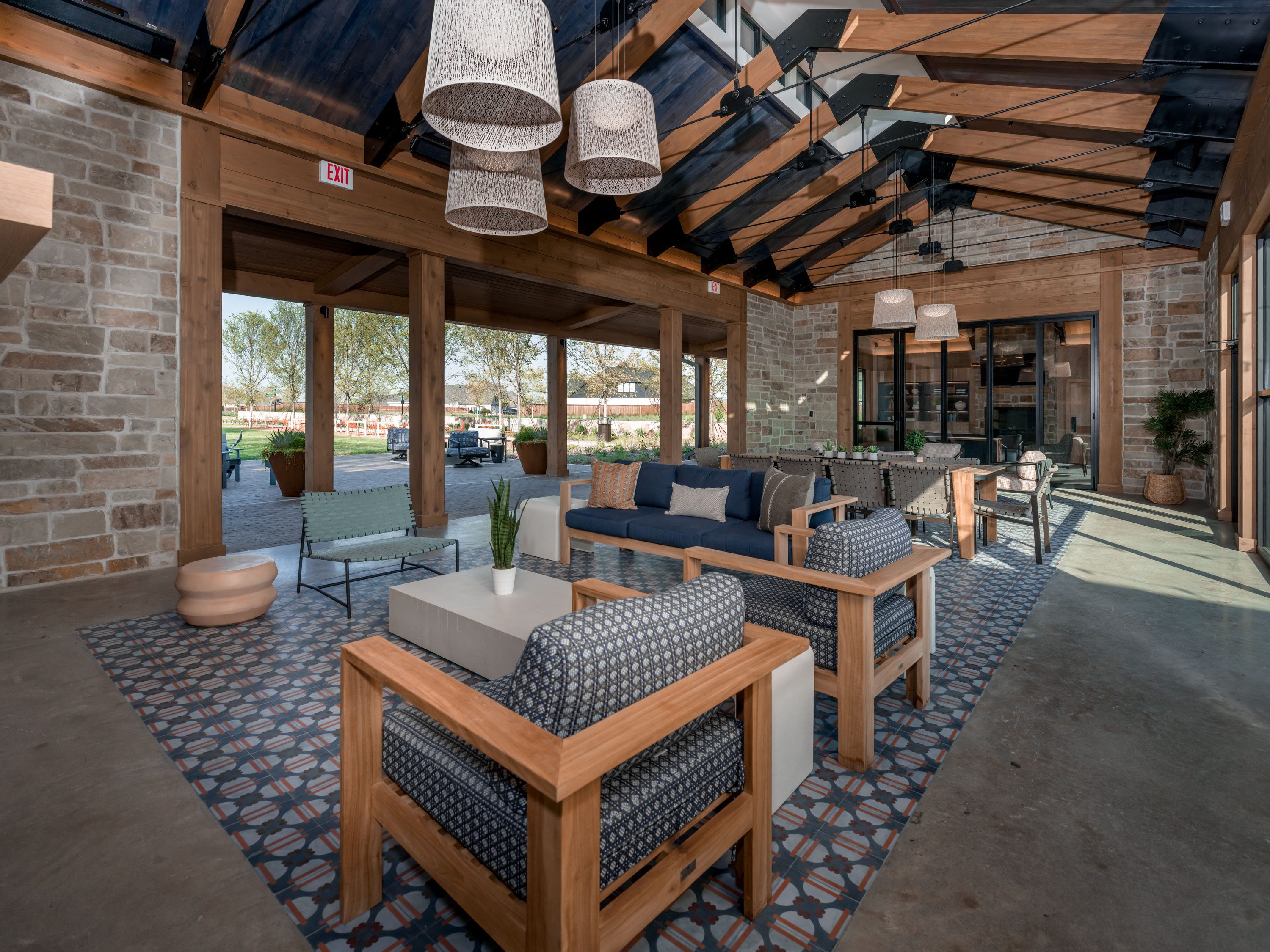
From June through September, afternoon temperatures can regularly reach the high 90s and beyond. Most people eventually adjust their routines around the weather. Outdoor activities tend to happen earlier in the morning or later in the evening, and pools, shade, and indoor spaces become especially important during the hottest part of the day, which is why it’s nice to have an on-site indoor clubhouse.
The Distances
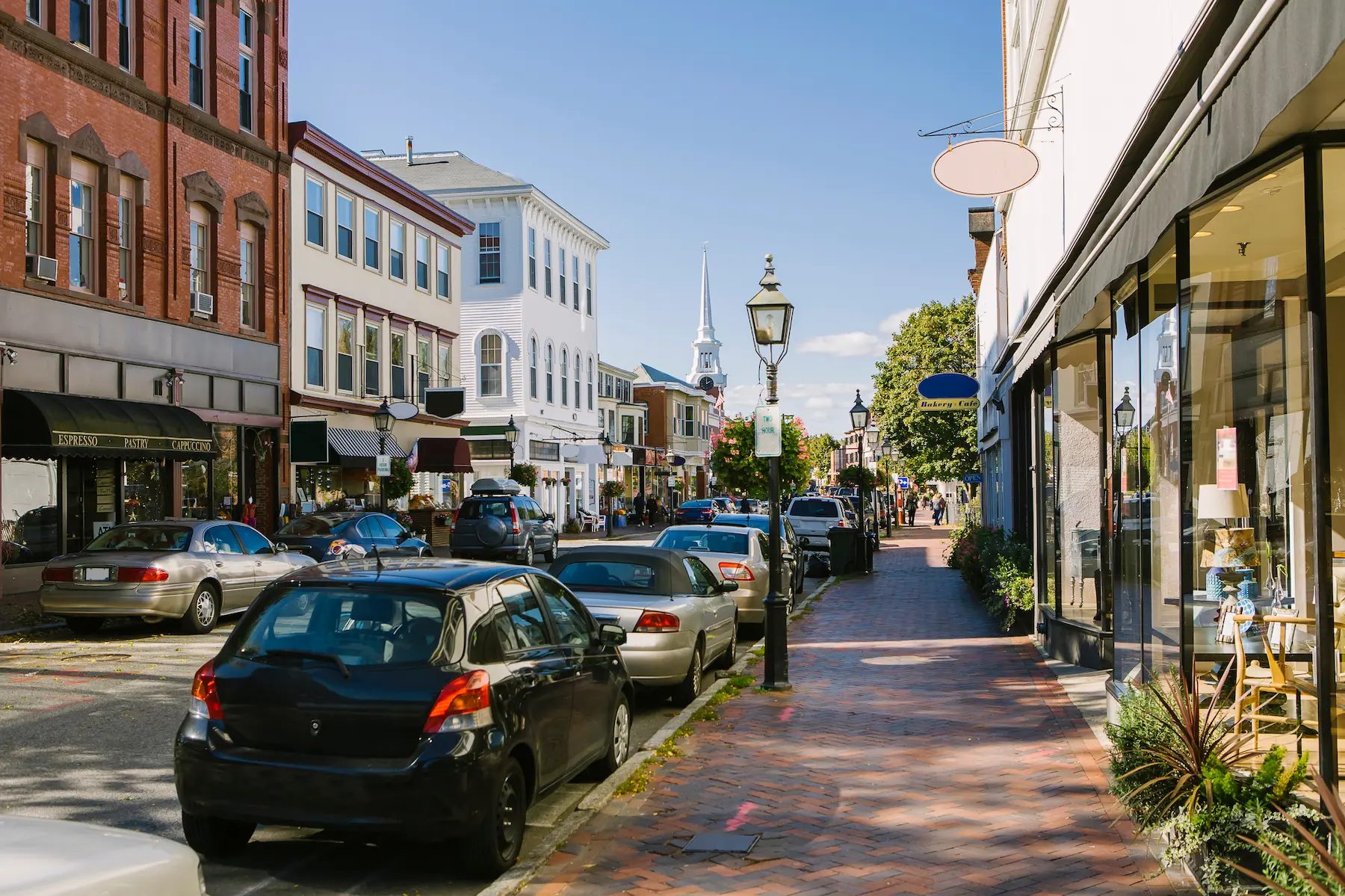
Nothing here is walkable in the way a northeastern town is walkable, and a fifteen-minute drive is often considered fairly close. What you get with a master-planned community like Hillstead is the space and amenities that come with the neighborhood. You get larger lots, bigger homes, and overall more room than what you’d find inside the city.
On top of that, amenities like trails, pools, courts, and playgrounds can be just a short walk from your front door. That can make everyday life a little easier, especially for families who don’t want to get in the car every time the kids want to go outside and do something.
That’s a big part of the appeal of the trail system at Hillstead. You may not have a coffee shop right around the corner, but you do get more space, larger homesites, open views, and plenty of room for the kids to play.

Special Districts
Municipal utility districts and public improvement districts are another thing that can catch new residents off guard. These districts help fund infrastructure such as water, sewer, drainage, and roads in developing areas. They can also have their own taxes or fees.
If you’re buying a home in a community with one of these districts, make sure you understand how it affects your total housing costs. Texas law requires sellers to provide written notice when certain special districts apply to a property, so be sure to review that information before closing.
The Property Tax Calendar
Texas property taxes also follow an annual schedule that may be unfamiliar if you’re moving from another state. Appraisal notices typically arrive in the spring, protest deadlines follow, tax rates are set later in the year, and property tax bills are generally sent in the fall. It may not mean much during your first few months in Texas, but you’ll become much more familiar with the process once you’ve owned your home for a year or two.
When you get here
Once you arrive, focus on the things that have firm deadlines first. Register your car, get your Texas driver’s license, and file your homestead exemption if you’re buying a primary residence.
Moving to a new state comes with a lot of logistics, but once the boxes are unpacked and the paperwork is behind you, you can start enjoying what brought you to North Texas in the first place.
If you’re considering a move to the area and want to see what life is like just outside Rockwall, explore the homes at Hillstead or come visit the community and walk the trails for yourself.
FAQ’s
How long do I have to get a Texas driver’s license after moving?
90 days from the date you establish residency. You can drive on your previous state’s valid license until then. The application is in person at a DPS office, and you will need proof of Texas vehicle registration to complete it.
How long do I have to register my car in Texas?
30 days. Get Texas insurance first, then an emissions inspection if you are in one of the 17 counties that require it, including Collin, then register at your county tax assessor-collector’s office.
Does Texas have a state income tax?
No. Texas collects through property and sales taxes instead, and property tax rates run higher than the national average as a result.
Are property taxes high in Texas?
Higher than most states, yes. Rates are set locally and vary considerably by address. At Hillstead the combined 2025 rate was about $2.51 per $100 of assessed value, which the homestead exemption reduces once you file.
What do I need to enroll my kids in school?
Districts generally ask for proof of residence, immunization records, a birth certificate, and transcripts. Gather immunization records before you move, since requirements differ by state and records are harder to retrieve from a distance.
Is it cheaper to live in Texas?
Usually, if you are coming from a state with an income tax and expensive housing. Less clearly, if you are coming from somewhere that already has no income tax. Housing is where most of the difference shows up.